
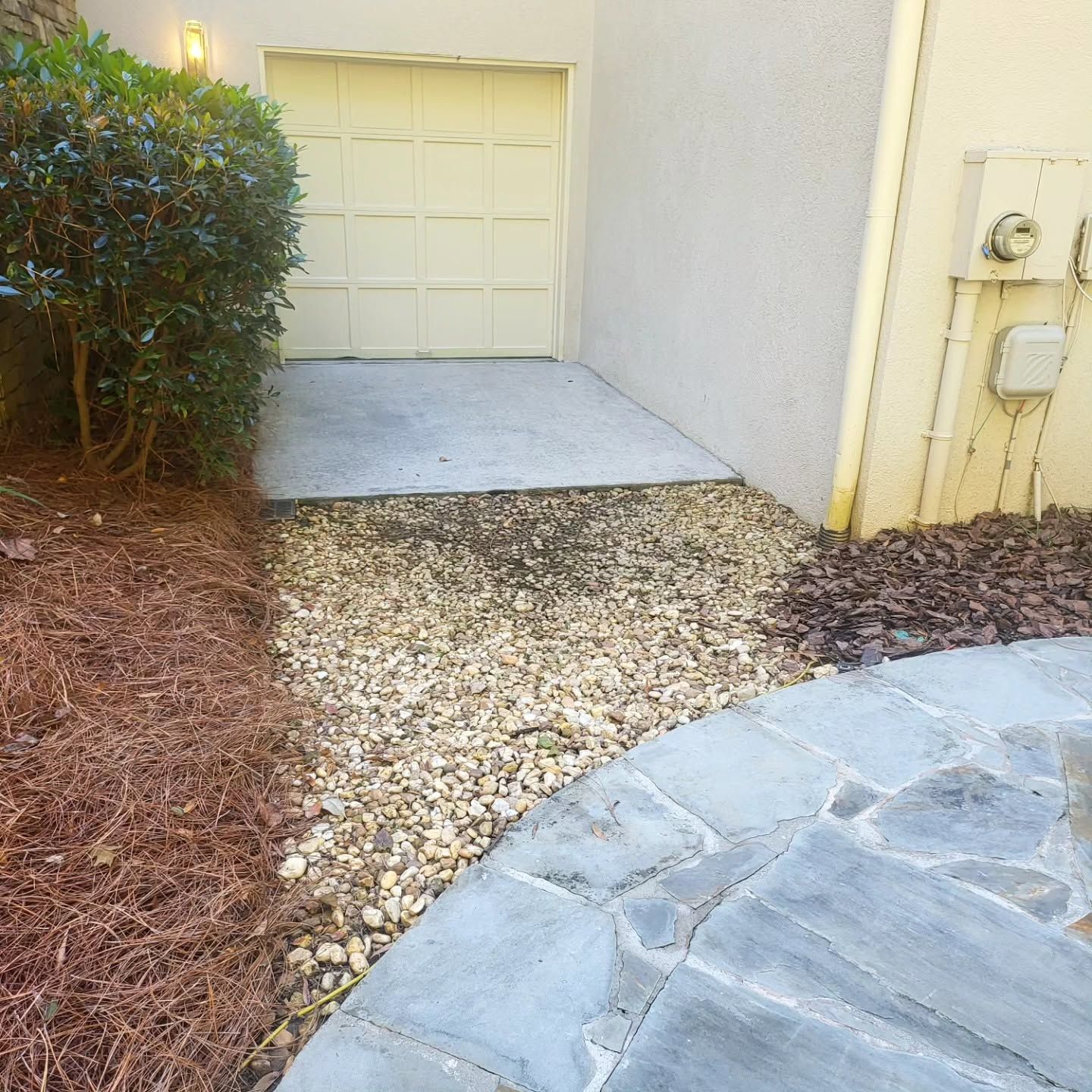
Drainage-Focused Rock Beds That Shed Water
Rock installation in Atlanta for landscape areas that require functional drainage and decorative ground cover suited to Georgia clay
Rock beds installed without base preparation or grading settle unevenly into Atlanta's clay soil, creating low spots where water pools instead of draining, and decorative stone placed directly on compacted clay does nothing to improve runoff management. Proper rock installation requires understanding how water moves across the property, preparing a stable base that prevents sinking, and selecting stone size and type based on whether the bed serves decorative or functional drainage purposes. Grasskings LLC installs rock in residential and commercial landscapes across Clayton County, Cobb County, and the downtown Atlanta corridor, applying structural knowledge that treats rock placement as part of the drainage system rather than decorative topping applied without site prep.
The process begins with site preparation that removes sod or existing mulch, grades the bed to direct water toward planned drainage points, and compacts the base to prevent settling. Material selection considers stone size—smaller river rock for decorative beds versus larger riprap for high-flow drainage channels—and installation includes placing landscape fabric to separate stone from clay soil without blocking water movement.
Schedule a property visit to assess your drainage patterns and identify where rock installation can redirect runoff.
What Changes After Rock Installation Completes
Installed rock beds drain faster than mulch or bare soil because stone doesn't absorb water, allowing runoff to flow through gaps between stones and into the soil beneath, and properly graded beds channel water away from foundations or low-lying areas instead of allowing it to pool on the surface. Base compaction prevents the settling that creates uneven surfaces and trip hazards, so the bed maintains its grade and appearance through seasonal freeze-thaw cycles and heavy rain events.
You'll notice water moves visibly through the rock bed during rain rather than ponding, and the stone remains level without sinking into soft spots or migrating downhill. Beds require less maintenance than mulch because rock doesn't decompose, blow away, or need annual replacement, though leaves and debris still collect on the surface and require periodic blowing or raking.
The service includes base preparation, material sourcing, and installation, but it does not include French drain integration, underground drainage pipe installation, or retaining wall construction unless specified as part of a larger project.
What Property Owners Usually Ask
Questions about rock installation typically focus on how stone selection affects drainage performance and what preparation work the site requires.
What base preparation does rock installation require in Georgia clay?
Clay soil must be graded to the desired slope, compacted to prevent settling, and covered with landscape fabric that allows water to drain while blocking soil from migrating up into the stone layer.
How does stone size affect water drainage?
Larger stones create bigger gaps that allow faster water flow, making them better for areas with heavy runoff, while smaller decorative rock works for low-flow beds where visual appearance matters more than drainage capacity.
Why do some rock beds settle unevenly after installation?
Settling occurs when the base isn't compacted properly or when clay soil beneath the fabric remains soft and compresses under the weight of the stone, creating low spots that collect water and worsen over time.
How does rock installation in Atlanta differ from mulch beds?
Rock doesn't decompose or need annual replacement, but it also doesn't add organic matter to the soil, so beds intended for future planting work better with mulch, while high-traffic or wet areas benefit from rock's durability and drainage performance.
What maintenance does a rock bed require after installation?
Leaves, pine needles, and debris accumulate on the surface and require blowing or raking several times per year, and stone may need occasional regrading if freeze-thaw cycles or heavy foot traffic shift material out of place.
Grasskings LLC approaches rock installation with grading and drainage planning rather than simple material placement, so the finished bed functions as part of your property's water management system. Contact the team to review your site conditions and discuss whether rock or mulch better suits your drainage needs and maintenance preferences.